
OpenAI–AMD’s 6 GW Deal: What It Means for Investors Navigating AI data center power demand
TL;DR: OpenAI and AMD struck a multi-year agreement to deploy up to 6 gigawatts (GW) of AI compute, starting with 1 GW in 2H 2026 using AMD’s next-gen Instinct MI450 chips. OpenAI also received warrants for up to ~10% of AMD’s shares (subject to milestones). Translation for long-term investors: the AI build-out is colliding with AI data center power demand, supply-chain concentration, and capital-intensive timelines—factors that create opportunity but also execution and timing risk [1][2][3][4].
What exactly was announced—and why does it matter?
OpenAI and AMD signed a multi-year, multi-generation partnership to deploy 6 GW of GPU capacity for OpenAI’s next-gen infrastructure. The first 1 GW comes online in the second half of 2026, anchored on AMD’s Instinct MI450 platform [1][2]. As part of the deal, OpenAI received warrants to purchase up to 160 million AMD shares at $0.01—roughly up to a 10% stake if milestones are met (delivery and share-price thresholds) [3][4].
Why it matters: this is a high-signal move in two ways. First, OpenAI is diversifying beyond Nvidia, which has dominated AI accelerators, potentially broadening the supply base and influencing pricing and availability. Second, the scale (6 GW) underscores the industry’s trajectory: AI demand is planning years ahead, tying compute roadmaps to power, real estate, and manufacturing constraints—not just chips [1][2][5][6].
How does 6 GW translate to “real world” constraints?
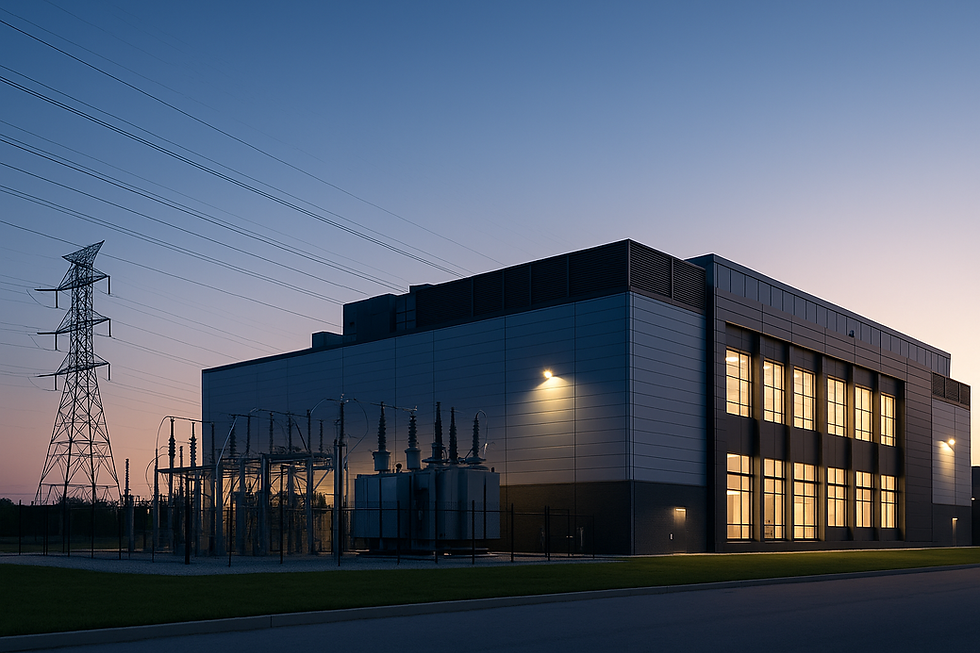
Think of 6 GW as multi-campus data center power—a quantity that interacts directly with utility interconnections, grid upgrades, and local permitting. U.S. grid planners already project a step-change in five-year load growth tied to strategic industries, including data centers and AI. One widely cited analysis shows five-year load forecasts rising to ~128 GW—a five-fold jump from prior outlooks [5]. Independent research and industry commentary highlight the same bottleneck: power availability and timing have become the gating factors for AI capacity, not simply chip counts [6].
For investors, that means timelines matter: even with signed chip deals, site power, transformers, switchgear, and interconnect queues can push deployments right. The first OpenAI/AMD 1 GW tranche is slated for 2H 2026, emphasizing that execution spans years, not quarters [1][2].
What’s the potential impact across sectors?
Semiconductors: AMD gains a marquee customer and multi-year visibility if milestones are met, while Nvidia remains the incumbent leader. Competitive dynamics (performance, software stack maturity, delivery cadence) will shape margin and share over 2026–2028. Equity moves on day one are not the thesis; the thesis is whether silicon, software, and supply chains line up on schedule [2][3].
Power & utilities: Utilities with AI-ready load growth, modernized tariffs, and faster interconnect processes may see capex cycles extend. Developers enabling on-site generation, grid-support technologies, or energy storage could benefit from the same trend [6].
Data-center REITs & equipment: Land with available megawatts, transmission proximity, and water/thermal solutions grows more valuable. Electrical gear (transformers, switchgear) and cooling are potential pinch points in 2026–2027 build-outs [6].
Software & services: More compute can expand model training and inference capacity; however, unit economics (cost per token/task) will hinge on utilization, power contracts, and hardware efficiency improvements—key drivers of sustainable margins across the stack [1][6].
How should long-term investors think about AI data center power demand and portfolios?
Avoid single-headline positioning. This is a multi-year capex story with technical, supply-chain, and regulatory dependencies. Treat early price spikes as volatility, not validation [3][4].
Diversify your “AI picks & shovels.” The ecosystem spans chips, packaging, optical interconnects, power gear, cooling, grid services, and real estate. Concentrated bets raise idiosyncratic risk if timelines slip.
Watch power as a leading indicator. Interconnect approvals, PPA structures, and utility procurement can telegraph which metros and operators will scale first—often preceding the revenue inflection.
Revisit risk controls. AI narratives can outpace fundamentals. Align position sizes, liquidity needs, and rebalancing rules with your custom financial plan. If you don’t have one, our fiduciary team can help you build a Custom Financial Blueprint that incorporates thematic exposures without overreaching your risk budget.
Want to discuss how themes like AI and grid modernization fit into your plan? Explore our Financial Planning and Investment Management approaches with a fiduciary advisor.
If you’d like a portfolio review focused on AI infrastructure, utilities, and risk controls, contact Halter Ferguson Financial to build a plan tailored to your goals. No hype—just a clear path through the noise.
Resources
[1] OpenAI. “AMD and OpenAI announce strategic partnership to deploy 6 gigawatts of AMD GPUs.” OpenAI News, 6 Oct. 2025. OpenAI
[2] Advanced Micro Devices (AMD). “AMD and OpenAI announce strategic partnership to deploy 6 gigawatts of AMD GPUs.” Press Release, 6 Oct. 2025. Advanced Micro Devices, Inc.
[3] Reuters. “AMD signs AI chip-supply deal with OpenAI, gives it option to take a 10% stake.” 6 Oct. 2025. Reuters
[4] Associated Press. “OpenAI and chipmaker AMD sign chip supply partnership for AI infrastructure.” 6 Oct. 2025. AP News
[5] Grid Strategies. Strategic Industries Surging: Driving US Power Demand. Dec. 2024. Grid Strategies
[6] Data Center Frontier. “Utilities Race to Meet Surging Data Center Demand With New Power Models.” 6 Oct. 2025. Data Center Frontier


Comments